Best Man Speech Examples That Actually Work (Why They Land)
Three real best man speeches from TikTok, broken down move by move.
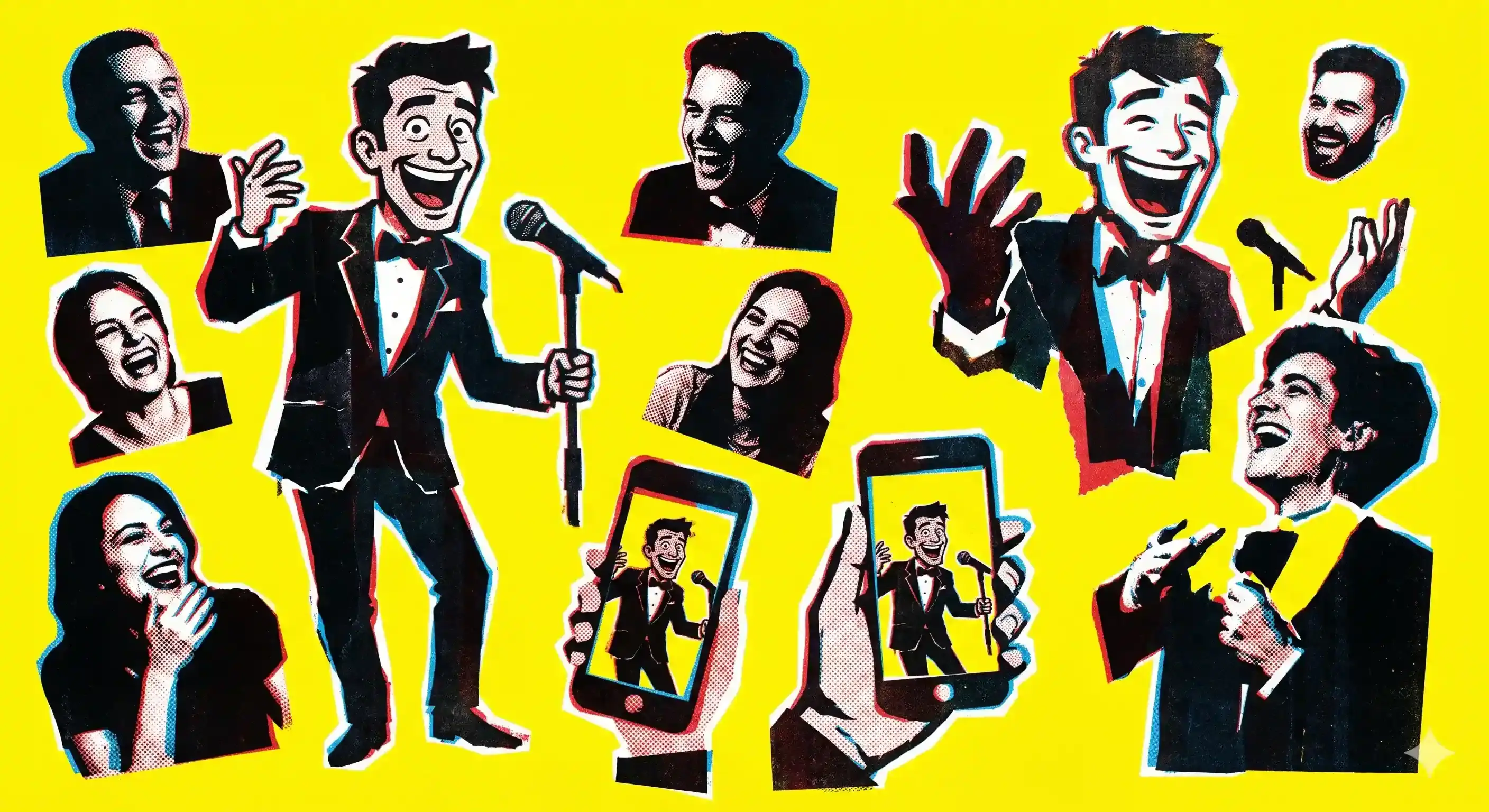
Search "best man speech examples" and you'll find two kinds of results. Bland template libraries that read like wedding card greetings. And TikTok compilations of speeches that actually made the room laugh, cry, or both.
The template ones are safe and forgettable. The TikTok ones are the reason people still remember a wedding ten years later.
This article is about the second kind. We've pulled three real best man speeches from TikTok and broken down exactly what they're doing. Which lever they're pulling, which specific beat tips it over the edge, and what you can steal for your own speech.
None of this is "be yourself" advice. Every working best man speech is doing something concrete. Once you see the moves, you can copy them.
Three things every landing best man speech gets right
Before the examples, the short version of what separates a speech the room remembers from one they politely clap through.
- Jokes with calibration. Humour that goes close enough to the line to feel risky but never crosses it. The bride laughs too.
- A tonal shift that's earned. A move between funny and sincere that doesn't announce itself. The audience just follows.
- An ending that's the part they quote. The last 20 seconds are what gets remembered. Everything before that is vibe.
All three clips below hit all three. They're doing different things with each lever, but the underlying pattern is the same.
Example 1: The calibrated roast (jokes that could go wrong but don't)
What's happening. A best man is landing a run of jokes at the groom's expense. The videographer's caption nails why it works: "a few slightly risky jokes aimed mostly at the groom (nothing too over the top), and it had the whole room in stitches." Watch the crowd. That's the real tell. You see the laughter, the face-palms, the side-glances between guests wondering how far it's going to go.
Why it works. This is the hardest craft in a best man speech, and the one most people get wrong. The bar isn't "be funny." The bar is calibrated risk. Jokes that are too safe feel like a Hallmark card. Jokes that push too hard turn the room cold and make the bride stop smiling.
The calibration is in three places. First, the jokes are aimed at the groom, never at the bride or the in-laws. The target matters more than the content. Second, they're affectionate. The groom is being made to look uniquely himself, not made to look bad. Third, the best man commits. Risky jokes die when they're delivered with an apology on the face. This one lands them like he believes them.
The side-glance reactions in the video are doing something important: they're showing other guests enjoying the tension. A best man speech that's a little risky makes the room lean in. Everyone's wondering if the next line is going too far. That wondering is the engagement. The safe version doesn't have it.
What to steal. Write your riskiest joke first. Then check: is the groom the only target? Would you say it to his face on a normal Tuesday? Would the bride laugh if she overheard you telling it at the bar? If all three are yes, keep it. If any are no, find the version that fixes that and try again.
Example 2: The laugh-to-cry switch
What's happening. The caption is the whole point: "We were laughing and crying." The speech has been getting real laughs, the room is warm and loose, and then the best man pivots into something sincere about who the groom actually is. The tonal change isn't gradual. It happens in one sentence, and the room lands with him.
Why it works. Comedy buys you trust. Once the room has been laughing with you for a few minutes, they'll follow you anywhere, including somewhere unexpectedly emotional. The reason this matters is that a speech that's only funny feels shallow by the end, and a speech that's only emotional feels heavy from the start. The contrast is what makes either register hit harder.
The mistake most best men make at this exact moment is flagging the switch: "But on a serious note…" or "All jokes aside…" Both of those phrases tell the audience to brace, which means the emotional beat has to break through a wall that the speaker just built. The speeches that land it hardest, this one included, just do it. One sentence of laughter, one sentence of sincerity, and the room follows because the trust was already there.
There's a physical tell. Watch the best man's face in the sincere sentences. He's not acting emotional, he's letting it be slightly uncomfortable. A small crack in the voice. A pause that's a half-beat too long. That's what makes it real rather than performed.
What to steal. If your speech is mostly funny, plant exactly one sincere sentence near the end and deliver it without any setup. No "but seriously." No "on a personal note." Just say the thing. The contrast does the work for you.
Example 3: The ending nobody sees coming
What's happening. Almost the entire clip is about the last 20 seconds. The best man lines up what feels like a standard closing beat and then does something unexpected with it. A turn that nobody in the room saw coming. The videographer's caption, "well that is one way to end your best man speech," is doing a specific job: it's the universal TikTok caption for an ending that breaks from the template.
Why it works. The end of a best man speech is the only part that gets remembered word-for-word. Everything before it is a vibe; the last line is a quote. Which means it has to be clean enough to remember, and ideally a little surprising, so the room is still talking about it at the bar later.
Most speeches blur their ending because the best man gets nervous and starts stacking qualifications: "I'm not good with words, but…", "I know I've gone on too long, but what I really want to say is…", "Anyway, if everyone could just raise their glass…" Every one of those phrases is a dent in the last thing the room hears. By the time the toast lands, the audience is already halfway to the bar.
This speech does the opposite. The ending is the moment. The best man has structured the whole speech so the last beat is the one that pays off. You can almost feel him holding a card back for the closer, which is exactly what good standup comedians do with their last joke of a set.
What to steal. Write your last line first. Before you draft anything else, decide the exact sentence you're going to end on and work backwards. It doesn't need to be clever. It needs to be compressed, clean, and ideally a small surprise. A beat the audience didn't see coming based on everything you said before. Then structure everything in front of it as the runway.
The reusable framework
Pattern-matching across the three, the craft that separates a landing speech from a forgettable one reduces to three pillars:
- Calibrate, don't play it safe. The best jokes are the ones that almost went too far. Aim at the groom, commit to the delivery, never cross into the bride or the in-laws. The risk is the engagement.
- Earn the tonal shift, don't announce it. If your speech is funny, one sincere sentence near the end lands ten times harder than a sincere paragraph. No "but seriously." Just say it.
- Write the ending first. The last sentence is the only line the room will quote back. Every other line should be building toward it.
Everything else is optional: the thank-yous, the self-deprecating intro, the "I promise I'll keep this short." Most speeches would be sharper without them.
What not to do (two common fails)
Two failure modes that show up in almost every speech that doesn't land:
Fail 1: The CV speech. A list of facts about how you met the groom, where you went to college together, what job he does, what his hobbies are. This reads as a LinkedIn summary in front of 150 people. Fix: replace every fact with a scene. Not "he's a loyal friend," but "he drove four hours through a snowstorm to help me move a mattress."
Fail 2: The inside-joke speech. Ten minutes of references that six people in the room understand and everyone else politely sits through. Fix: if a joke needs a paragraph of context, it belongs in a different speech. The one you give the groom alone at the bachelor party.
A note on writing vs. talking your speech
One thing worth flagging. If you watch the three clips with the transcripts off, you'll notice they sound like someone talking, not reading. The best ones have the rhythm of a story told to a friend over a beer. Pauses, little self-corrections, warmth.
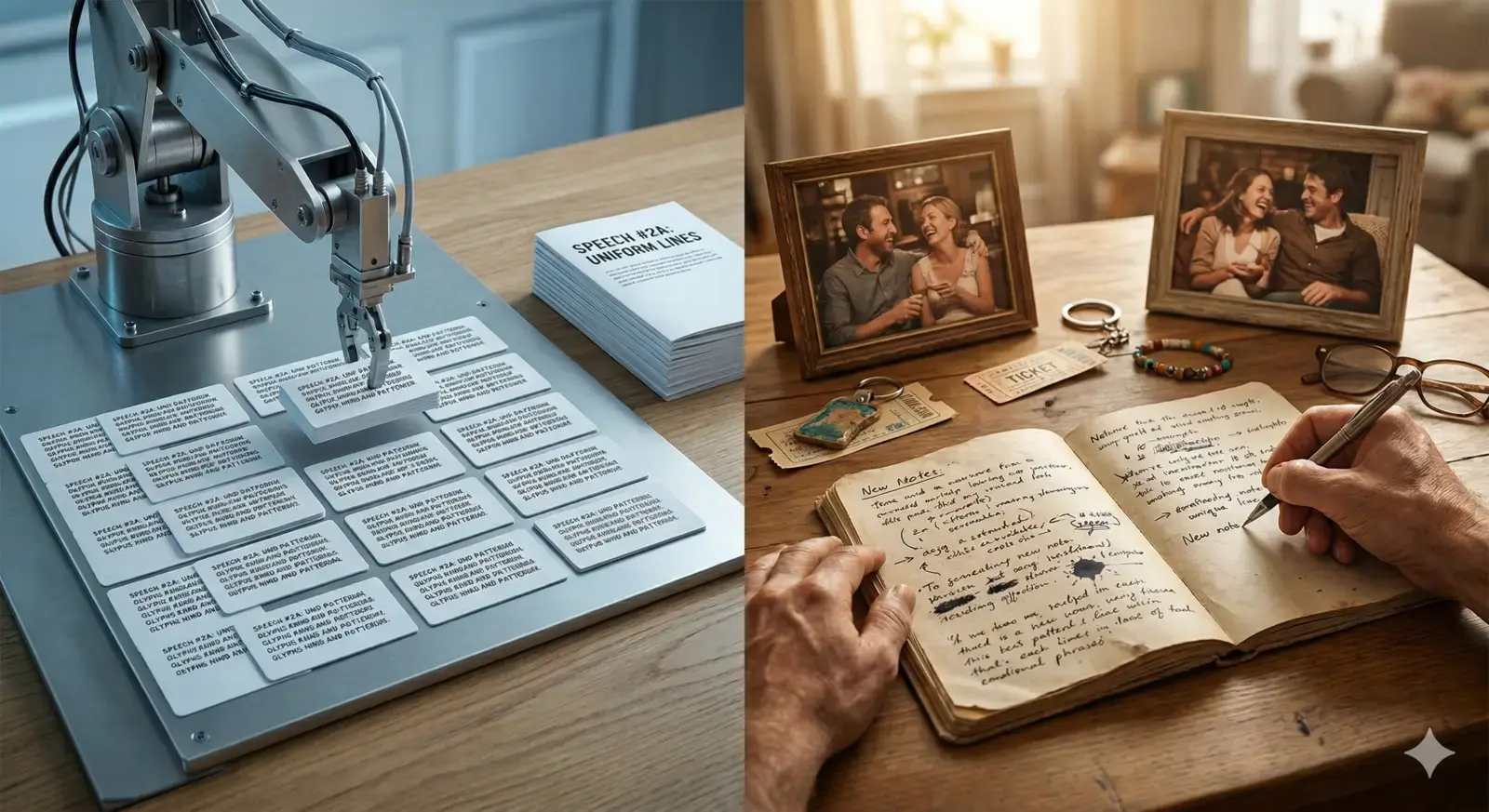
That's almost impossible to fake by typing at a blank page. Typing makes you sound like an email. Which is one of the reasons most AI wedding speeches feel generic. They're built from typed prompts that were never going to sound like anyone's real voice.
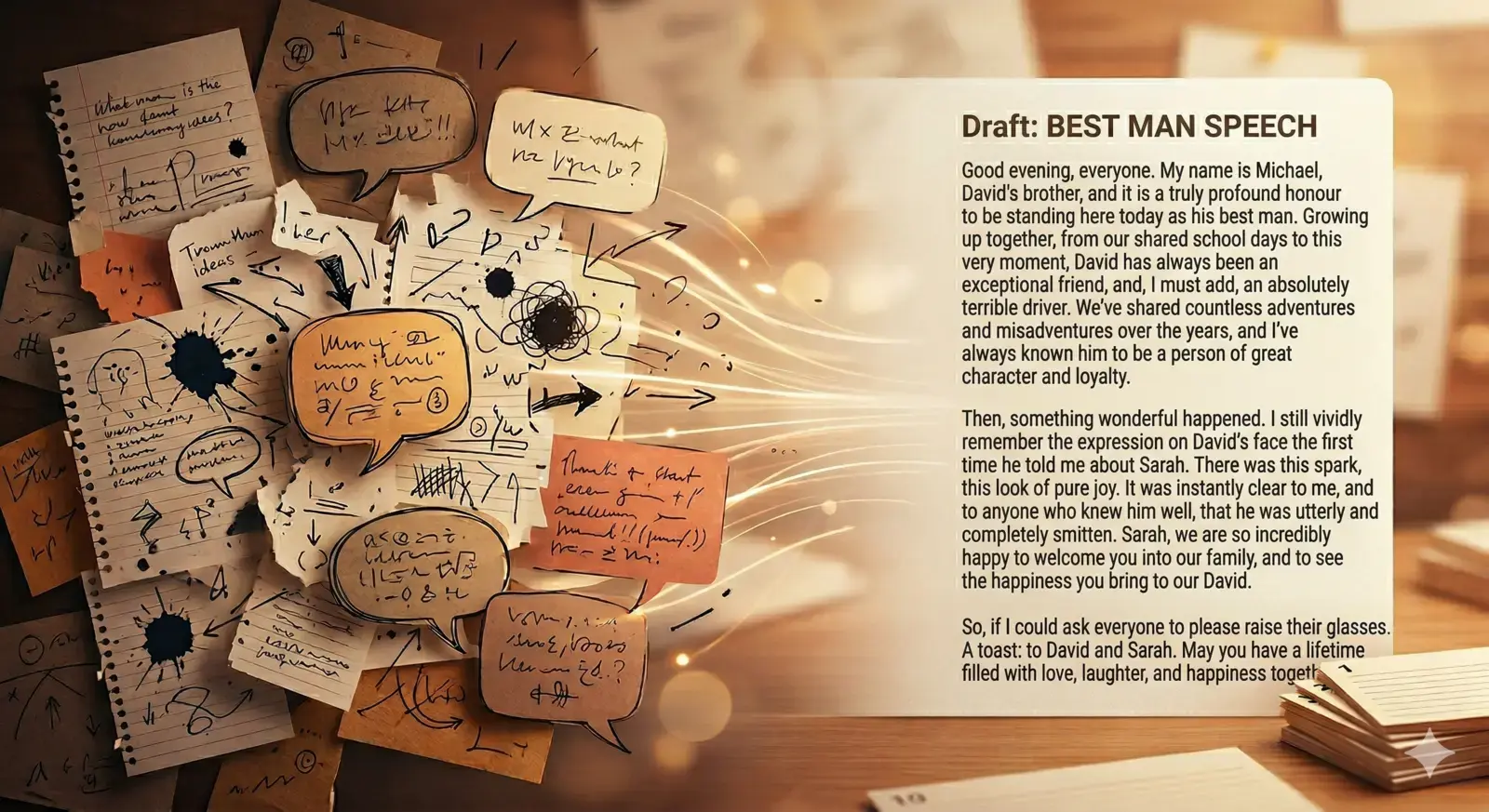
If you want the speech to sound like you, start by speaking it. Record a voice note talking about the groom. The risky joke, the sincere thing you want to say about him, the line you most want the room to remember. Don't script. Just talk. Then shape that into a speech.
Or let a tool built for exactly this job do the shaping for you.
Try this before you write a single line
Twenty minutes, no writing required. Open your phone's voice recorder and answer these three prompts out loud, one at a time:
- The risky joke. Tell the funniest true story you'd tell about the groom at a bachelor party, then decide which version of it is safe enough to say in front of his grandmother.
- The sincere sentence. Say the one thing you most want the room to understand about your friend. One sentence. No setup.
- The ending. Say the exact last line you'd want to land on, before the toast.
Stop recording. That's the spine of your speech. Everything else is runway.
When you're ready to turn it into something you can stand up and deliver, start with your voice, not a blank page.
Ready to try talk-first speech writing?
Skip the blank page. Speak your memories and Nail The Speech will turn them into a speech that sounds like you.
Start Your SpeechNot ready to write yet? Grab the free 10-questions PDF to find your stories first.
Related Articles
Great speeches start with speaking
The only wedding speech generator that starts with your voice. Talk through your memories and get a speech you're proud to deliver.
Start Your Speech