Great speeches start with speaking, not writing
Explore the science, strategy, and practical tips behind talk-first speech writing. A better way to prepare your wedding speech — starting with your voice instead of a blank page.
Start here
Maid of Honor Speech Examples That Actually Work (Why They Land)
Three real maid of honor speeches from TikTok, broken down move by move.
Read article
Mother of the Bride Speech Examples That Actually Work (Why They Land)
Three real mother of the bride speeches from TikTok, broken down move by move.
Read article
Funny Wedding Speech Examples That Actually Work (Why They Land)
Three speeches that genuinely made the room laugh — best man, maid of honor, parent — broken down.
Read article
How to Write a Destination Wedding Speech (It Does Different Work)
When half the room has crossed time zones to be there, the speech changes. Here's how.
Read article
Second Marriage Wedding Speech Examples (and How to Get the Tone Right)
Honor the present, nod to the past, include the children. The tone that makes it land.
Read article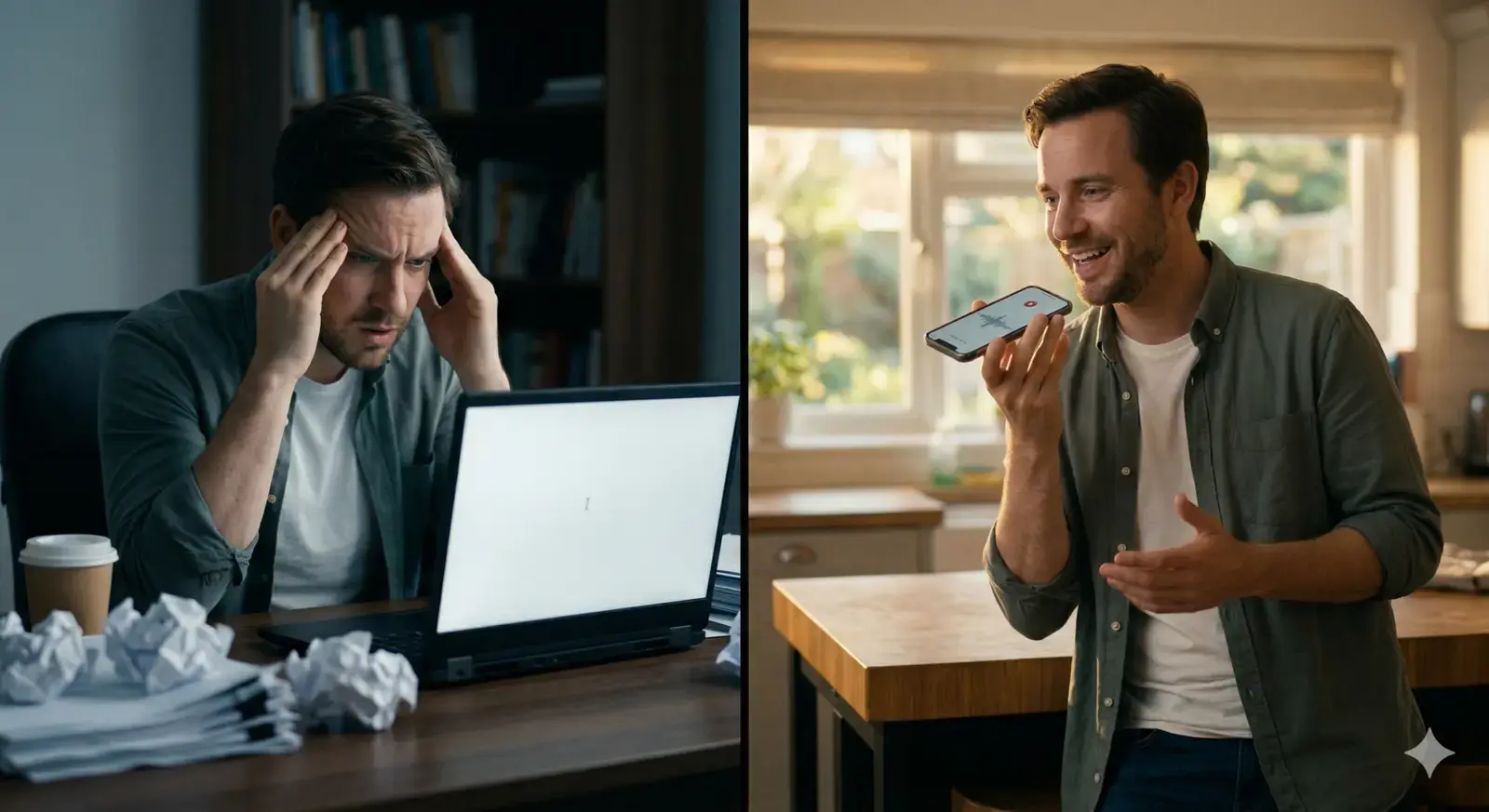
Why Writing Your Wedding Speech Is the Hardest Way to Do It
Writing forces structure too early. There's a better way to start.
Read article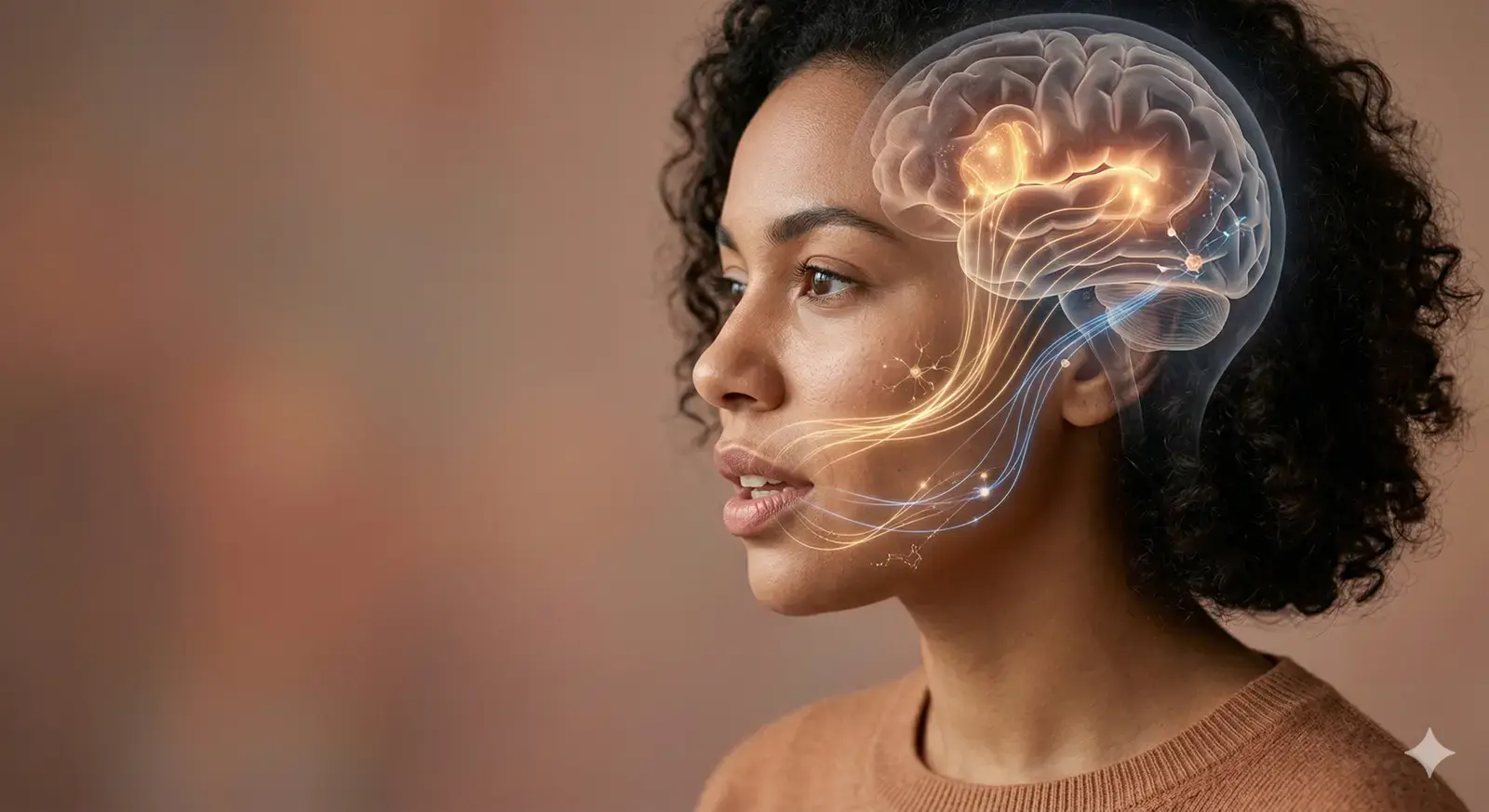
The Science of Why Talking Produces Better Speeches Than Writing
Speaking uses different cognitive pathways, and they're better suited to speeches.
Read article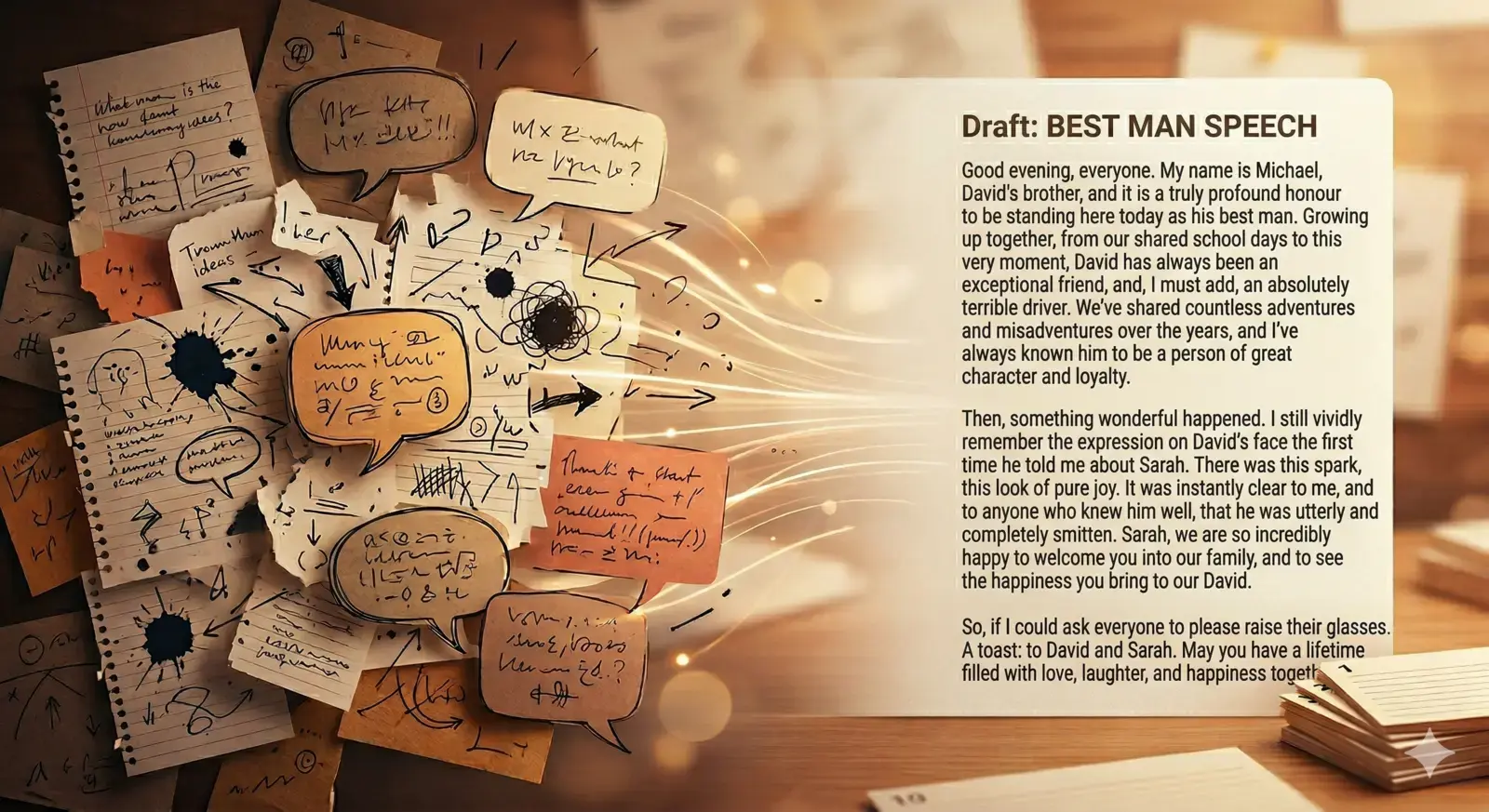
How to Turn a Rambling Story Into a Great Wedding Speech (Without Writing It)
Four steps from messy memories to structured speech, no blank page required.
Read article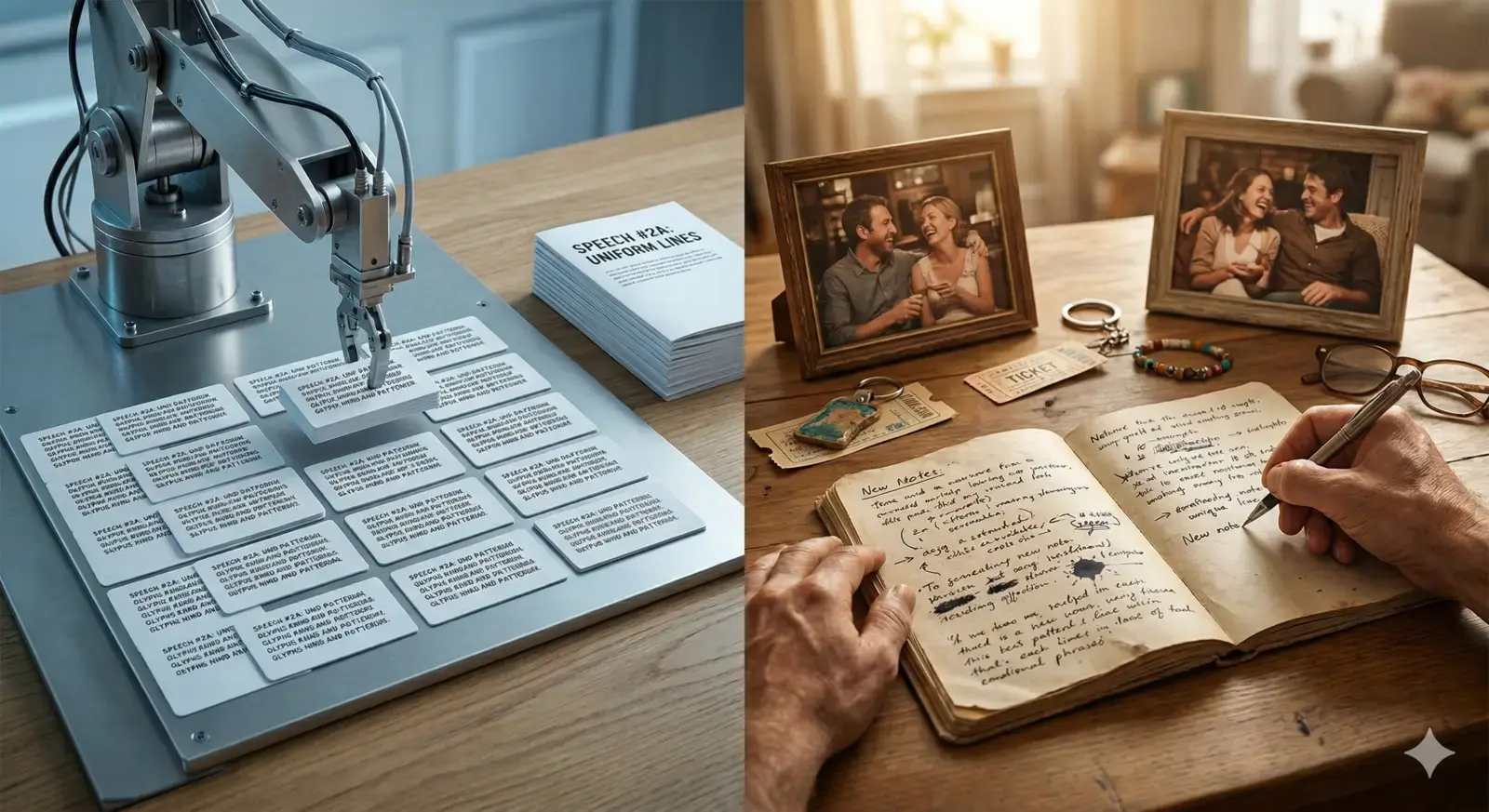
Why Most AI Wedding Speeches Feel Generic (And How to Avoid It)
The problem isn't AI. It's how you feed it.
Read article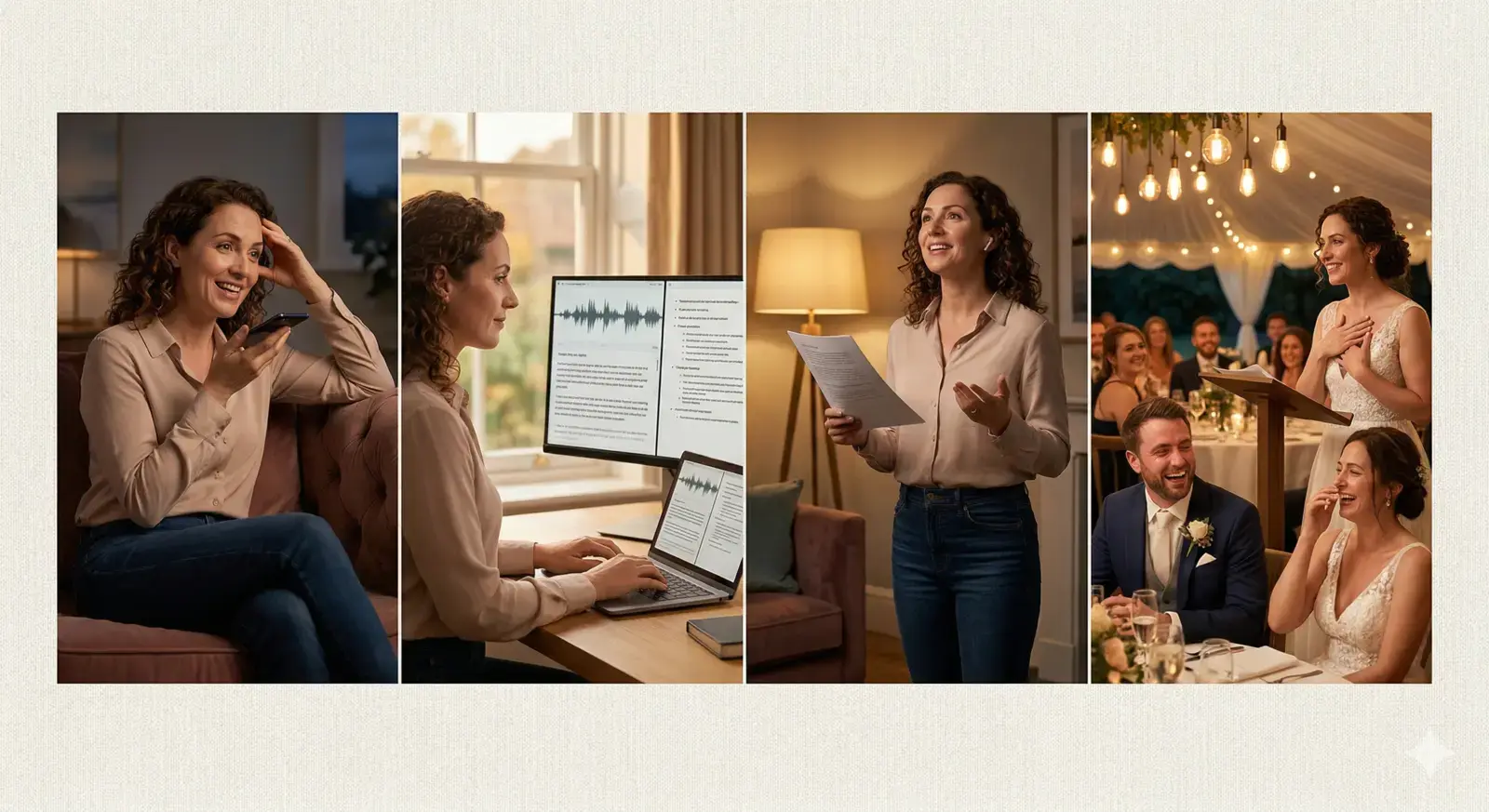
From Voice Note to Wedding Speech: A Better Way to Prepare
Record. Structure. Listen. Rehearse. A new workflow for speech prep.
Read articleReady to try talk-first speech writing?
Talk through your memories and let Nail The Speech turn them into a speech that sounds like you.
Start Your SpeechQuestions about talk-first speech writing
Why is speaking better than writing a speech?
When you write, you tend to overthink every sentence and lose your natural voice. When you speak, you relax. Stories come out more naturally, details resurface, and the result sounds like you.
This is backed by research on how different cognitive pathways handle spoken vs written language. Speaking activates episodic memory — the part of your brain that stores personal experiences — more directly than writing does.
Does starting with voice actually improve a speech?
Yes. People who talk through their ideas first tend to produce speeches that are more personal, more natural in tone, and the right length. Written-first drafts often sound formal and run long because you add padding without realising it.
You can try it yourself in the generator — talk through your memories and see how the structured version compares to what you would have written.
Can I still edit my speech afterwards?
Absolutely. Starting by speaking doesn't mean you skip editing. It means you start with better raw material. Once you have a first draft, you can refine the wording, cut anything that doesn't land, and practise it out loud until it feels right.
How is this different from just writing a speech normally?
Traditional speech writing starts with a blank page. Talk-first speech writing starts with your voice. You share your stories and memories naturally, then structure them into a speech.
The result is the same — a written speech you can hold in your hand — but the process is faster and the output sounds more like you. For practical tips, see our advice guides.