The Science of Why Talking Produces Better Speeches Than Writing
Speaking uses different cognitive pathways, and they're better suited to speeches.
Every piece of wedding speech advice starts the same way. Sit down. Grab a pen. Open a doc. Get your thoughts on paper.
Sounds reasonable. The science says it's backwards.
If you want a speech that sounds natural, lands emotionally, and actually feels like you, the research is pretty clear. You should be talking, not typing.
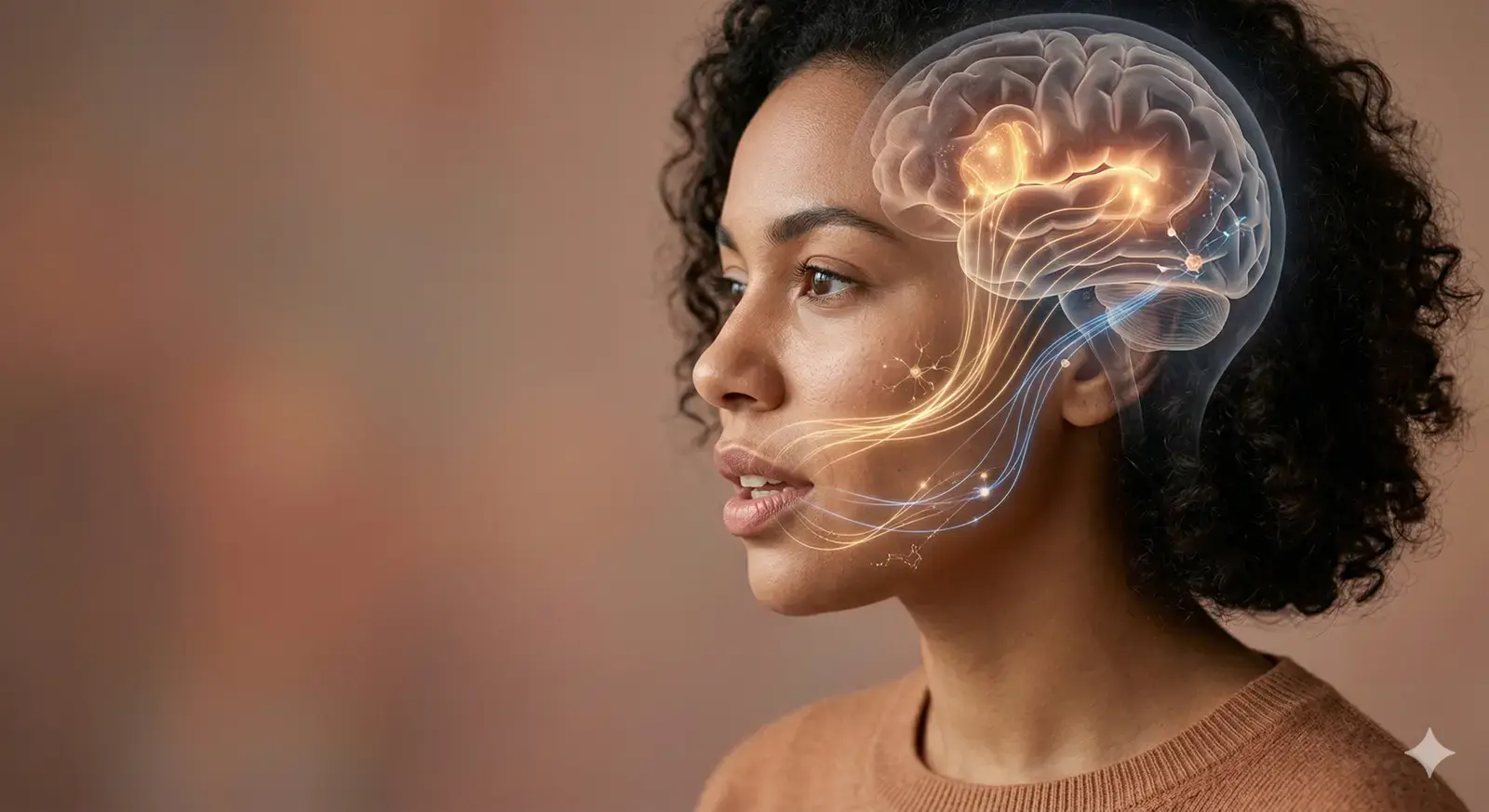
Your brain literally handles these differently
This isn't a metaphor. A 2015 study published in *Psychological Science* found that speaking and writing are processed by separate systems in the brain. Not just at the motor level (hands vs. mouth), but at the level of word construction and grammar.
Lead researcher Brenda Rapp studied stroke patients who could speak sentences perfectly but couldn't write them correctly, and vice versa. Her conclusion: the brain treats these as "two quasi-independent language systems."
So when you write a wedding speech and then try to deliver it at the reception, you're translating between two different cognitive modes. That's why written speeches so often sound stilted at the podium. They were built by the wrong system.
When you speak, you remember differently
Here's where it gets really relevant for speeches.
Research from the University of Chicago shows that emotion drives memory. The more emotionally charged a moment, the more vividly we recall it. And when we recall those moments out loud, we don't retrieve bullet points. We retrieve stories. Messy ones. Layered ones. Full of sensory detail.
Storytelling activates the hippocampus (the brain's memory centre) along with auditory, visual, and emotional regions all at once. That's why spoken recall is so rich. When you talk about the time your sister called you crying-laughing from a hotel bathroom on her honeymoon, your brain doesn't hand you a summary. It replays the whole scene.
Writing tends to flatten that. You edit as you go. You trim the tangent. You lose the texture.
Spoken language is already built for a room
A wedding speech isn't an essay. It's a conversation with a hundred people. And the language you produce when you're just talking to someone is already tuned for that.
When you speak, your sentences are shorter. Your rhythm is more natural. You pause where it matters. You use words you actually use, not words you think sound impressive on a page.
This is why Hemingway, Mark Twain, and Dan Brown all used dictation. They spoke their work to capture a voice that felt alive. Author Joanna Penn notes that dictation "bypasses the internal editor" and lets natural voice come through.
A wedding speech doesn't need polish. It needs presence.
Talk-first speech writing isn't a shortcut
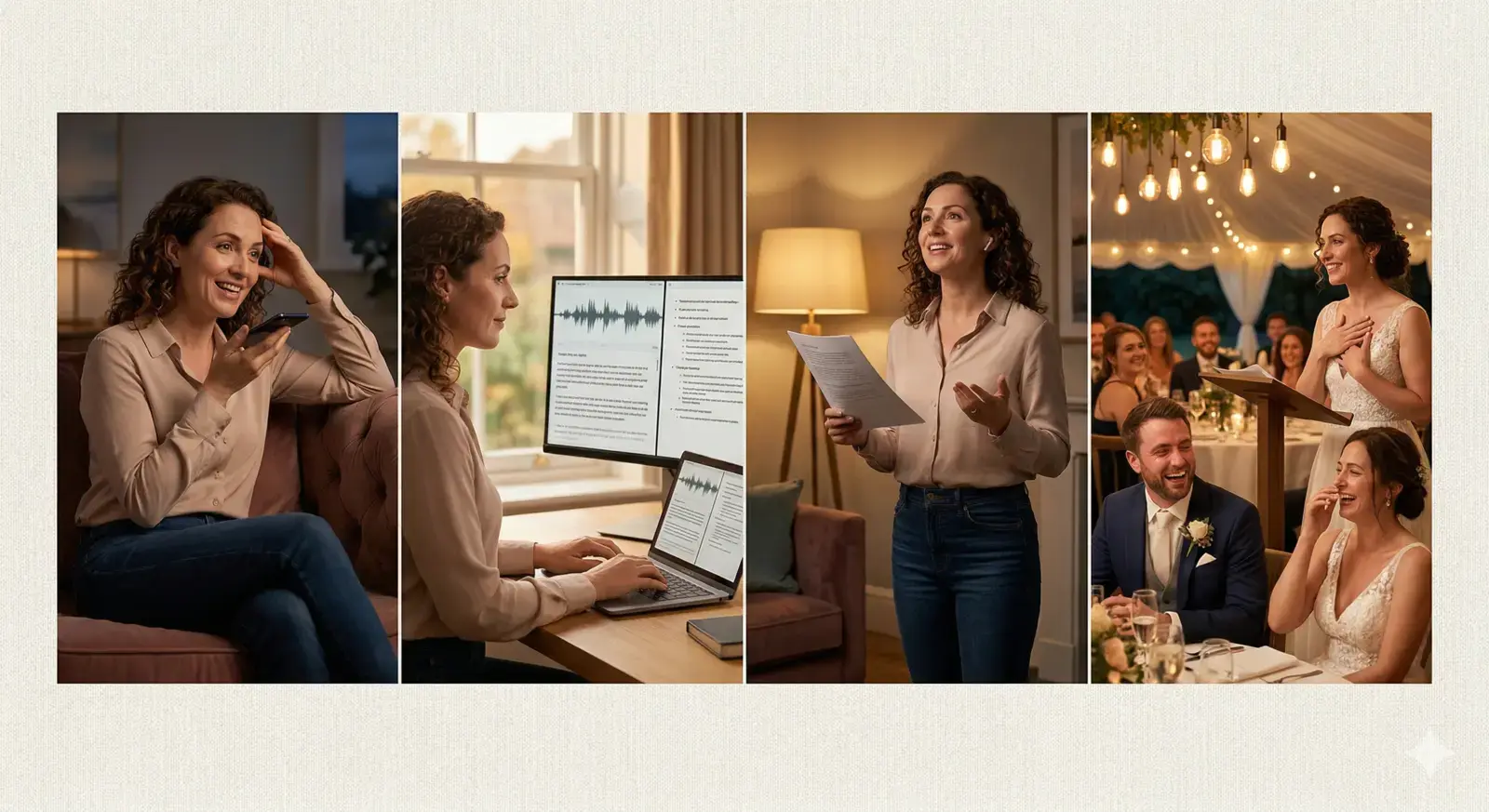
The usual approach (write, edit, memorise, deliver) asks you to build something in one cognitive mode and perform it in another. Talk-first speech writing flips that. You start in the mode you'll actually finish in: speaking.
You talk through your memories. The good stuff surfaces naturally. The details, the emotions, the stories only you know. Then you shape it.
You're not skipping the work. You're starting from better raw material.
Try this. Talk for two minutes about a time the couple made you laugh. Don't write anything down. Just say it out loud, like you're telling someone over coffee.
That's your opening. You just don't know it yet.
Why the tools matter too
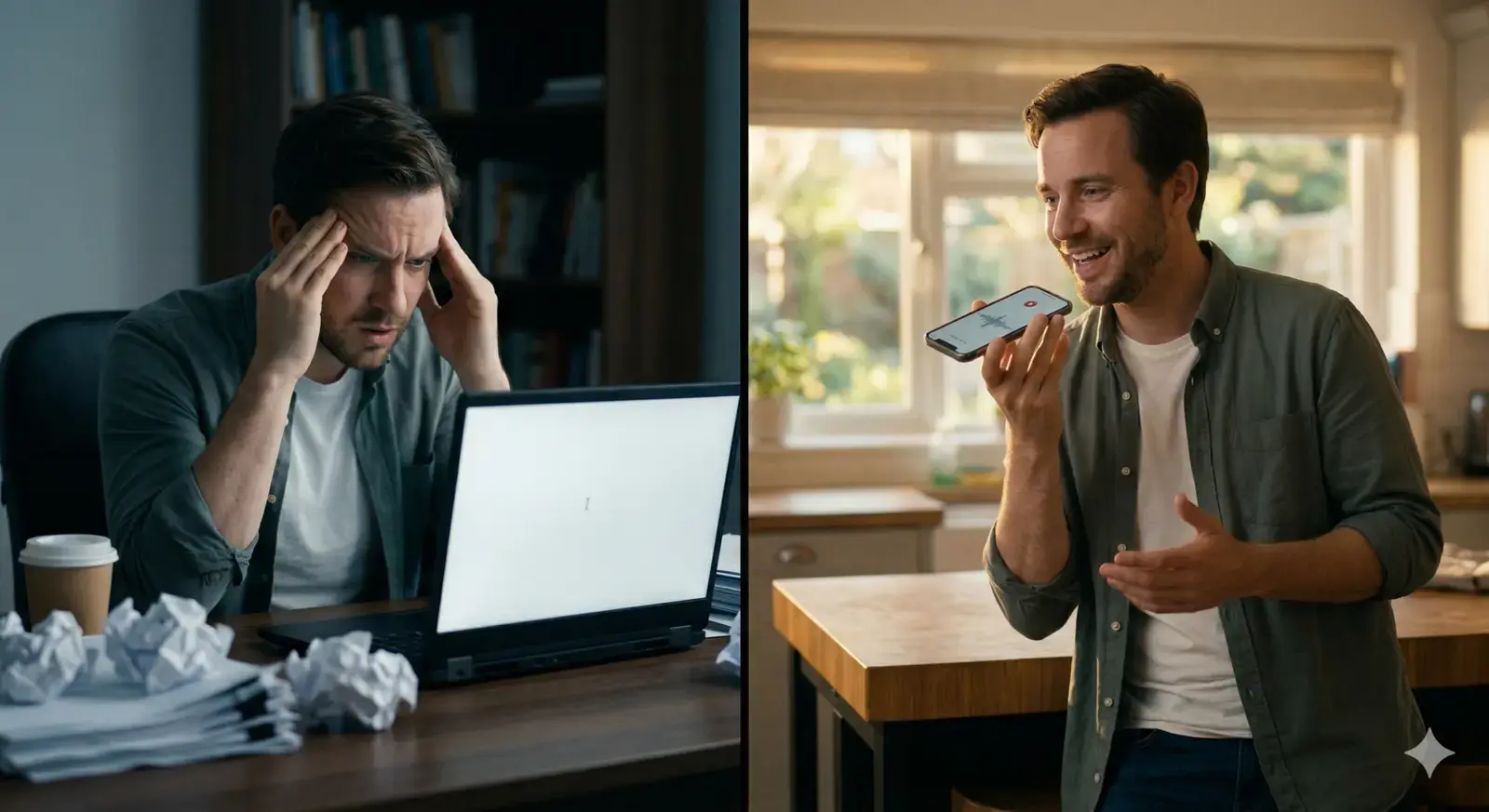
Most speech-writing tools start with a text box: "Type your memories here." But if speaking and writing use different brain systems, a text box is asking you to translate before you've even started.
NailTheSpeech starts with your voice instead. You speak your stories, and the tool structures them into a speech that still sounds like you. Because it began with you actually talking.
The problem with most speech tools isn't the AI. It's that they ask you to type.
Ready to try talk-first speech writing?
Skip the blank page. Speak your memories and Nail The Speech will turn them into a speech that sounds like you.
Start Your SpeechNot ready to write yet? Grab the free 10-questions PDF to find your stories first.
Related Articles
Great speeches start with speaking
The only wedding speech generator that starts with your voice. Talk through your memories and get a speech you're proud to deliver.
Start Your Speech