From Voice Note to Wedding Speech: A Better Way to Prepare
Record. Structure. Listen. Rehearse. A new workflow for speech prep.
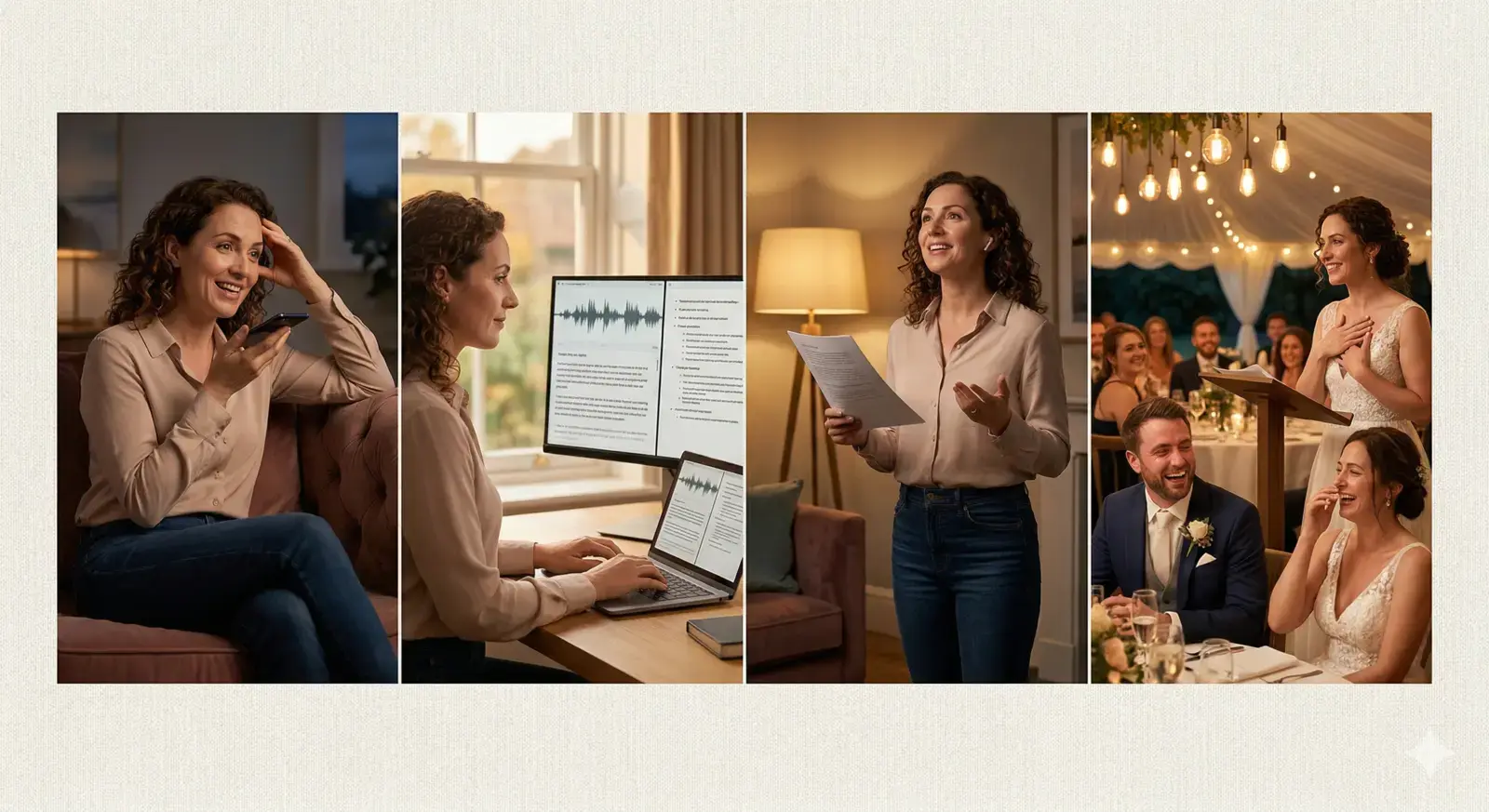
You send voice notes all the time. To friends, family, the group chat. You hit record, say what you're thinking, and fire it off without agonising over every word.
Now imagine doing the same thing for your wedding speech.
No blank page. No "Dear everyone, thank you for being here." No staring at a cursor wondering how to start.
Just you, talking about someone you love, the same way you'd tell a story to a mate. That's talk-first speech writing, and it works better than anything else I've seen.
Why a voice note beats a blank page
When you type, you edit in real time. Every sentence gets interrogated before the next one starts. You second-guess your words. You reach for language that sounds "speechy" instead of language that sounds like you.
When you record a voice note, you skip past all of that. Author Joanna Penn, who's studied dictation extensively, says speaking "mutes the critical voice" and lets your natural rhythm come through. Your humour, your warmth, your cadence. It's all there in the recording.
And this isn't some new productivity hack. Hemingway, Mark Twain, Winston Churchill, and Dan Brown all used dictation to get their voice onto the page. They understood something we've collectively forgotten in the age of keyboards: speaking is where the good stuff lives.
How it works, start to finish
Record your thoughts. Pick a quiet moment. A walk, a coffee, lying in bed when you can't sleep because the wedding is in three weeks and you still don't have a speech. Open your phone and just answer a few questions: "How did you meet them?" "What's a moment you'll never forget?" "What do you want people in that room to know about who they really are?" Talk for five minutes. Don't stop to think. Just go.
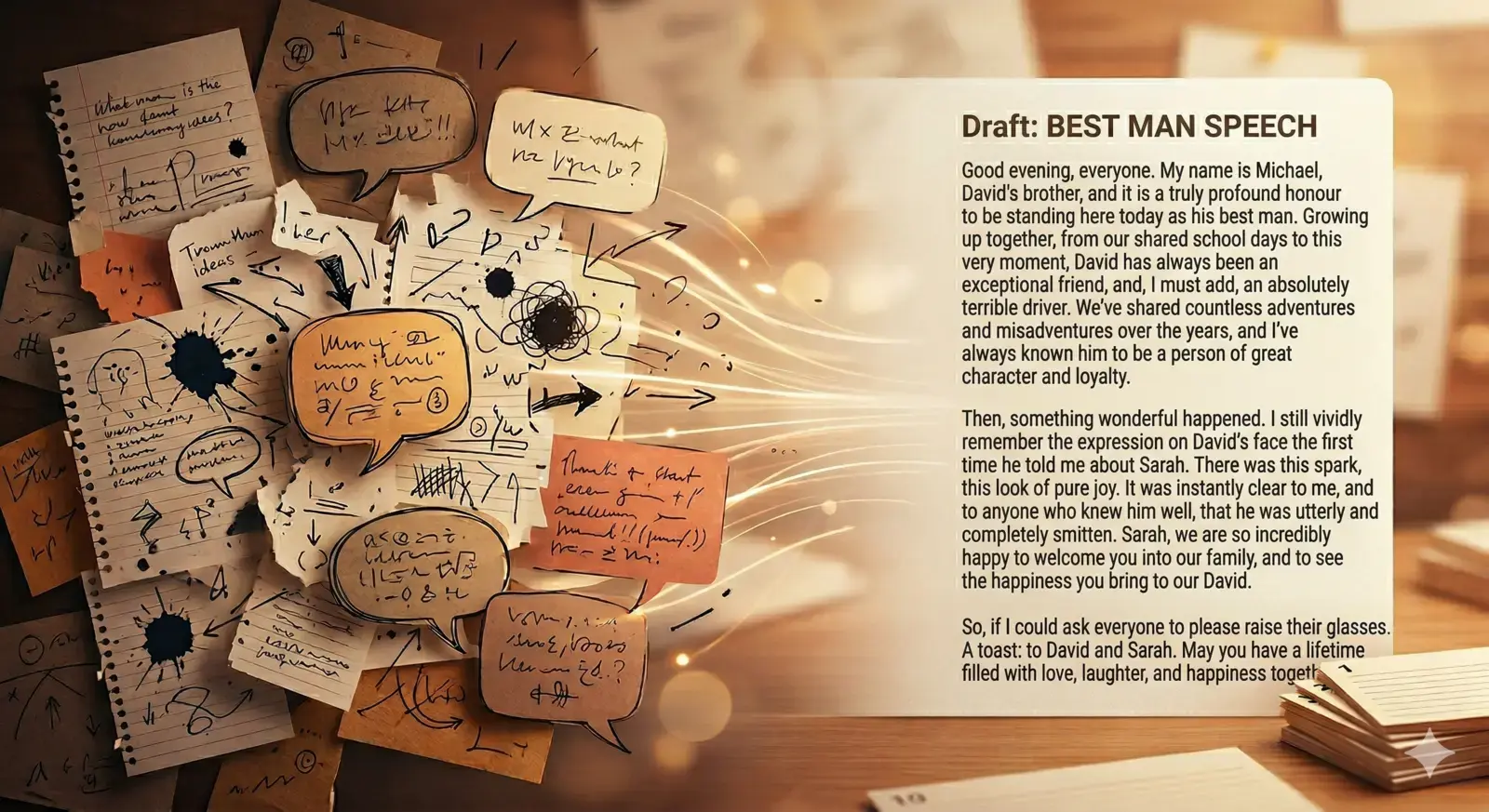
Let it become a speech. Your raw audio gets turned into something structured. Clear opening, a story or two in the middle, a toast at the end. The mess becomes a draft. The ramble becomes a narrative.
Listen back. This is the step most tools skip entirely, and it's the one that matters most. When you hear your speech, you catch things you'd never spot by reading. A sentence that goes on too long. A joke that doesn't quite land. A transition that feels clunky. Your ear is a better editor than your eye ever was.
Refine and practise. Tweak the bits that don't feel right. Then practise out loud. Not memorising word for word, but getting comfortable enough that you only need a few prompt notes on the day. Speech coaches are pretty unanimous on this: the sweet spot is knowing your material well enough to speak from the heart, not recite from a script.
Try this. Next time you're walking somewhere, record a voice note about the couple. Three minutes, no filter. You'll be surprised how much of your speech is already in there.
Hearing your speech changes everything
Most speech tools give you a Google Doc and call it done. But a wedding speech isn't a document. It's a performance. And practising out loud is one of the best ways to actually feel ready instead of just hoping for the best.
When you can listen to your speech, you're not just reviewing content. You're rehearsing delivery. You hear where to pause. You feel where the emotion lands. You notice which stories need more room and which need cutting.
That's a completely different thing to reading words on a screen. You're preparing to stand up in front of people you care about and say something real.
Why this actually works
Talk-first speech writing produces better results not because it's faster (though it is). It's because your voice carries information that typing never captures.
Your brain recalls memories more vividly when speaking. More emotion. More detail. More of the sensory texture that makes a story feel real. A voice note captures all of that. A text box gets you a fraction.
NailTheSpeech is built around the full loop: record your thoughts, turn them into a structured speech, listen back, refine, practise. It starts with your voice and keeps you in your voice the whole way through.
Because the best wedding speeches don't start with writing. They start with someone saying, "OK, let me tell you about the time..."
And it all flows from there.
Ready to try talk-first speech writing?
Skip the blank page. Speak your memories and Nail The Speech will turn them into a speech that sounds like you.
Start Your SpeechNot ready to write yet? Grab the free 10-questions PDF to find your stories first.
Related Articles
Great speeches start with speaking
The only wedding speech generator that starts with your voice. Talk through your memories and get a speech you're proud to deliver.
Start Your Speech