Funny Wedding Speech Examples That Actually Work (Why They Land)
Three speeches that genuinely made the room laugh — best man, maid of honor, parent — broken down.
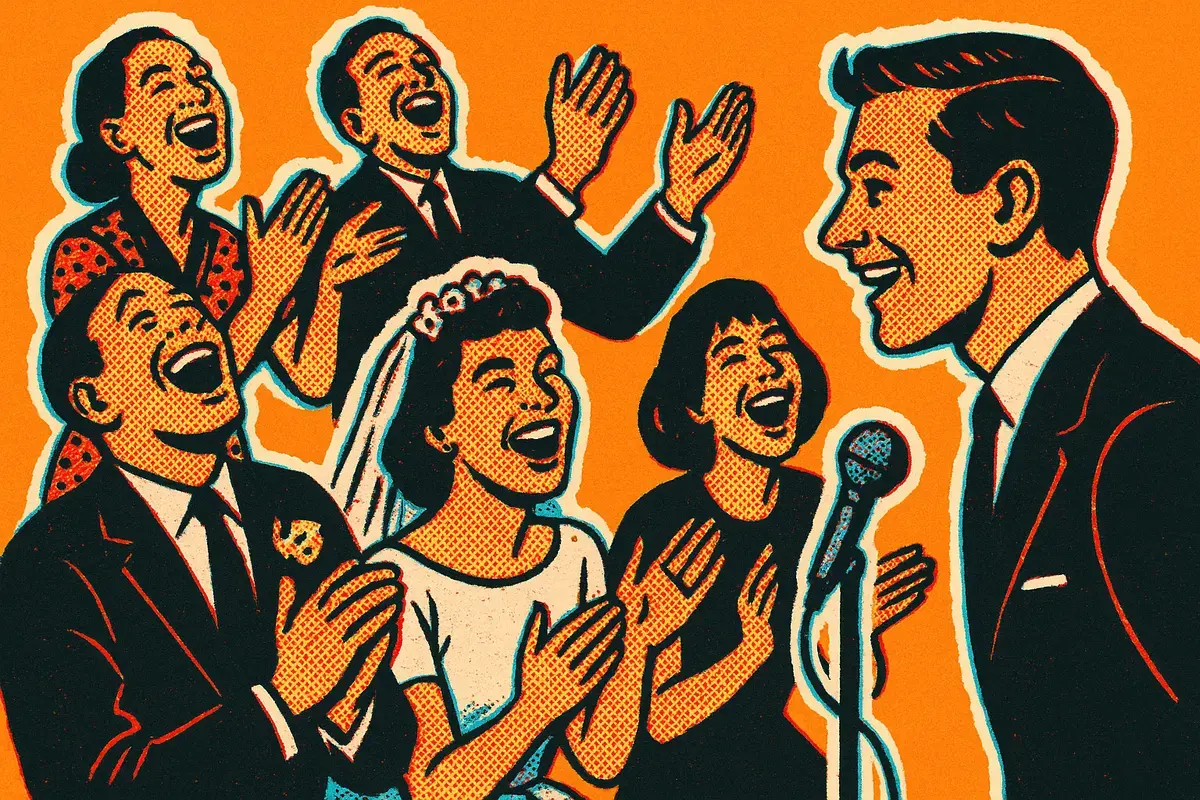
Search "funny wedding speech examples" and you'll get two kinds of results. Joke lists — generic one-liners and "insert groom's name here" gags that die on contact. And TikTok clips of speeches where the whole room is genuinely, helplessly laughing.
The joke lists are the reason most "funny" speeches aren't. The TikTok ones are the reason a wedding gets talked about for years.
This article is about the second kind. We've pulled three real wedding speeches from TikTok — from across the roles, a best man, a bride, and a father — and broken down exactly why the funny parts land. Because the speeches that actually make a room laugh aren't telling better jokes. They're borrowing from stand-up comedy.
The big secret up front: funny that lands is built, not blurted. Setup, then punchline. Timing over volume. A speaker who's clearly enjoying it. Once you see the craft, you can use it — whatever role you're giving the speech in.
Three things every genuinely funny speech gets right
Before the examples, what separates a room-in-stitches speech from one that gets polite chuckles.
- It's built like stand-up. A real setup and a real turn. The biggest laughs are constructed, not improvised on the spot.
- The surprise is half the laugh. The speaker you don't expect to be funny — the bride, the dad — often gets the biggest reaction in the room.
- It's calibrated, not just bold. Aimed at the right target, with obvious affection. Risky is fine; cruel is not.
All three clips below are doing one of these better than almost anyone — across three different roles.
Example 1: Build it like stand-up
What's happening. The videographer's caption says it outright: "When the best man is also a stand-up comedian. This speech stands out as one of the best best man speeches I have seen… years later it still cracks me up." This best man isn't just telling jokes — he's performing a set, with the structure and timing of someone who's done comedy.
Why it works. The difference between a funny speech and a list of jokes is construction. Stand-up comedians build every laugh: a setup that points the room one way, then a turn that lands somewhere they didn't expect. Amateurs rush to the punchline; pros let the setup breathe so the turn has somewhere to fall from. That's why this speech "still cracks him up years later" — built jokes survive, blurted ones evaporate.
The other thing a comedian brings is commitment. A joke delivered with an apology on the face dies. Delivered like you already know it's funny, the same line lands. Confidence is part of the construction.
What to steal. Take your best joke and split it in two: the setup (what you tell the room) and the turn (what they don't see coming). Slow down on the setup. Don't signpost the punchline. Then commit to it completely — say it like it's already the funniest thing in the room, and the room will agree.
Example 2: Treat it like a set
What's happening. This one's from the bride — and her caption is the entire lesson: "Pro tip, treat your wedding speech like a stand-up set and you'll have loads of craic." Two things make it land: the mindset (she's approaching it like a comedy set), and the surprise (a bride bringing the biggest laughs subverts everyone's expectation that the best man owns the comedy).
Why it works. Most people assume "funny" is the best man's job and everyone else plays it straight. So when the bride — or anyone outside the usual roles — walks up and treats it like a set, the room is doubly delighted: they're laughing at the jokes and at the lovely shock of not seeing it coming. The unexpected speaker has a built-in advantage, and the smart ones lean into it.
"Treat it like a set" is also just good advice mechanically. A set has a running order: open strong, build, land your best bit near the end. It's written to be performed, not read. That framing alone fixes most flat speeches.
What to steal. If you're not the "designated funny one" — the bride, a parent, a quiet groomsman — that's your edge, not your disadvantage. Plan it like a set: a strong opener, a couple of built bits, your best line saved for near the close. The room won't be expecting it, which makes every laugh bigger.
Example 3: The parent nobody saw coming
What's happening. This is a father of the groom getting the laugh — the seat at the wedding everyone expects to be purely sentimental. The videographer frames it with a joke of their own ("don't distract your husband when he needs to think about what to say about his son"), which tells you the comedy started before he even reached the mic.
Why it works. Nobody expects the dad to be funny, which is exactly why it lands so hard when he is. A well-placed laugh from a parent does double duty: it surprises the room, and — because the parent's speech is usually the emotional one — it makes the sincere beat that follows hit even harder. The contrast is the engine. Pure sentiment from a parent can get heavy; a genuine laugh first earns the tears.
The parents who pull it off keep the humor gentle and self-aware — a joke at their own expense, or a wry, knowing line about their kid. Never sharp, never at the couple. The warmth is what makes the surprise land instead of clang.
What to steal. If you're a parent, plant one gentle, self-aware laugh early — about yourself, or a fond, knowing detail about your kid. The room won't expect it, so it lands twice as hard, and it buys you the right to be as sincere as you want for the rest of the speech.
The reusable framework
Across all three roles, genuinely funny wedding speeches share three pillars:
- Build the joke, don't blurt it. Setup, then turn. Slow down on the setup, commit to the punchline. Constructed laughs survive; rushed ones evaporate.
- Use the surprise. If you're not the expected funny one, that's your advantage — plan it like a set and the room's delight doubles.
- Calibrate, and let the funny earn the heart. Aim at the right target, keep the affection obvious, and — especially for parents — use the laugh to set up one sincere line. Jokes alone feel thin; jokes plus one true beat is the whole game.
When you build your speech, picking a funny tone tells the generator to write for laughs while still leaving room for the sincere turn.
What not to do (two common fails)
Fail 1: The joke-list speech. Stringing together generic gags pulled from the internet. The room can smell a borrowed joke instantly. Fix: build a few jokes from real, specific stories about these people, properly set up.
Fail 2: The joke that punches down. Humor aimed at the bride, the in-laws, an ex, or anything genuinely sensitive. It turns the room cold in one line. Fix: aim at yourself or, gently, at the person being celebrated — and only at things they'd laugh at too.
A note on writing vs. talking your speech
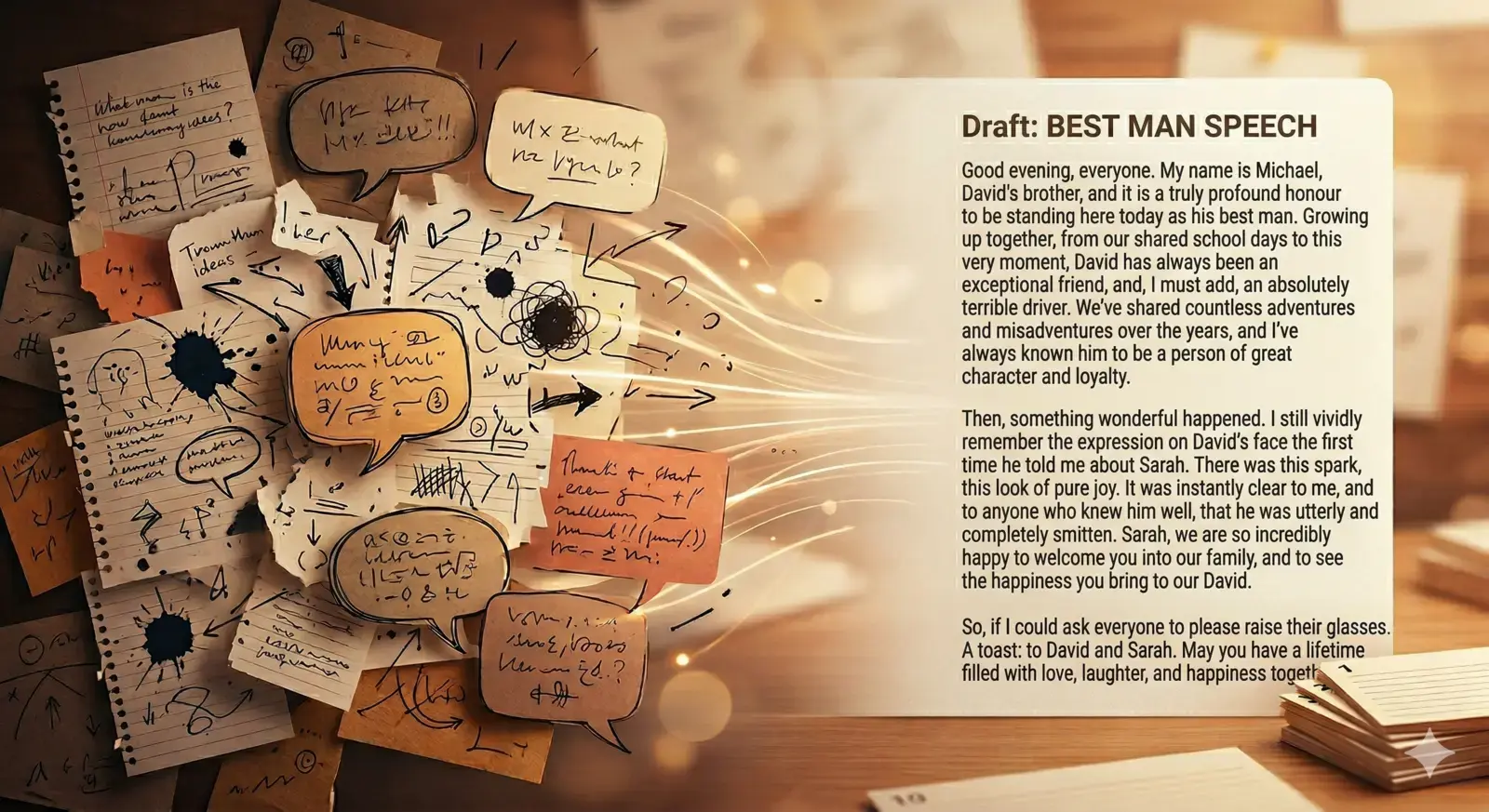
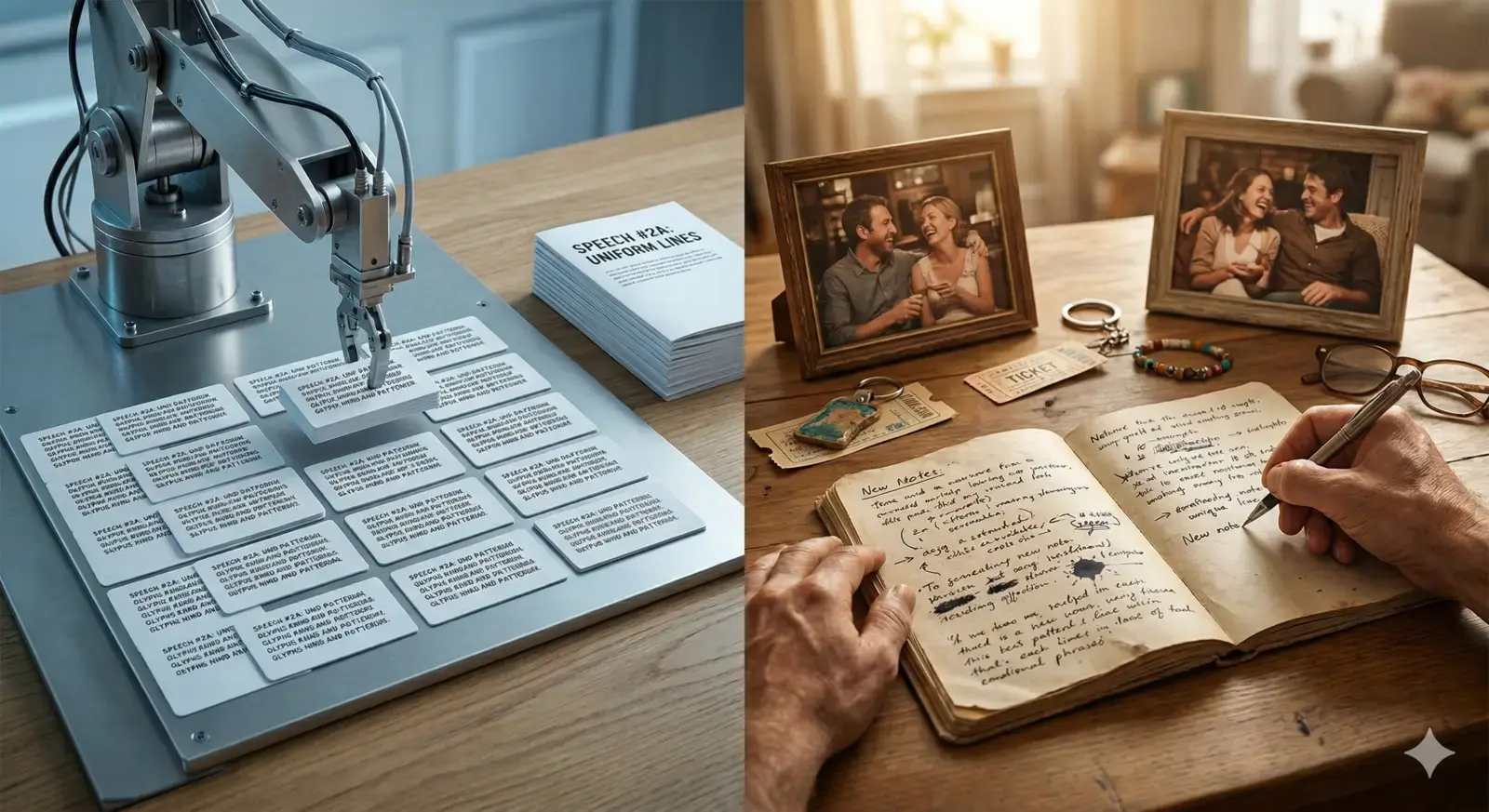
One thing worth flagging. Watch those clips with the captions off and the funny parts sound like someone performing a story to friends — timing, pauses, the confidence to wait for the laugh — not reading jokes off a card. Comic timing is almost impossible to fake by typing at a blank page, which is one reason most AI wedding speeches feel generic: a typed joke reads like a typed joke.
If you want your funny speech to actually land, start by speaking it. Record yourself telling the real, specific story out loud — the way you'd tell it at the bar. Don't script the jokes. Just talk, and notice where you naturally land a laugh. Then shape that into a speech — or let a tool built for exactly this job do the shaping, with the funny tone selected.
Try this before you write a single line
Twenty minutes, no writing required. Open your phone's voice recorder and answer these three prompts out loud, one at a time:
- The built joke. Take the funniest true story about the person you're toasting and split it into a setup and a turn. Say it slowly, holding the punchline.
- The calibration check. Say it again in the version you'd happily tell in front of their grandparent. That's the one.
- The turn. Say the one sincere line your laughs are setting up — the true thing under the jokes.
Stop recording. That's the spine of a funny speech that actually lands — laughs that are built, and a heart they earned.
When you're ready to turn it into something you can stand up and deliver, start with your voice and pick the funny tone — not a blank page.
Ready to try talk-first speech writing?
Skip the blank page. Speak your memories and Nail The Speech will turn them into a speech that sounds like you.
Start Your SpeechNot ready to write yet? Grab the free 10-questions PDF to find your stories first.
Related Articles
Great speeches start with speaking
The only wedding speech generator that starts with your voice. Talk through your memories and get a speech you're proud to deliver.
Start Your Speech