Groom Speech Examples That Actually Work (Why They Land)
Three real groom speeches from TikTok, broken down move by move.
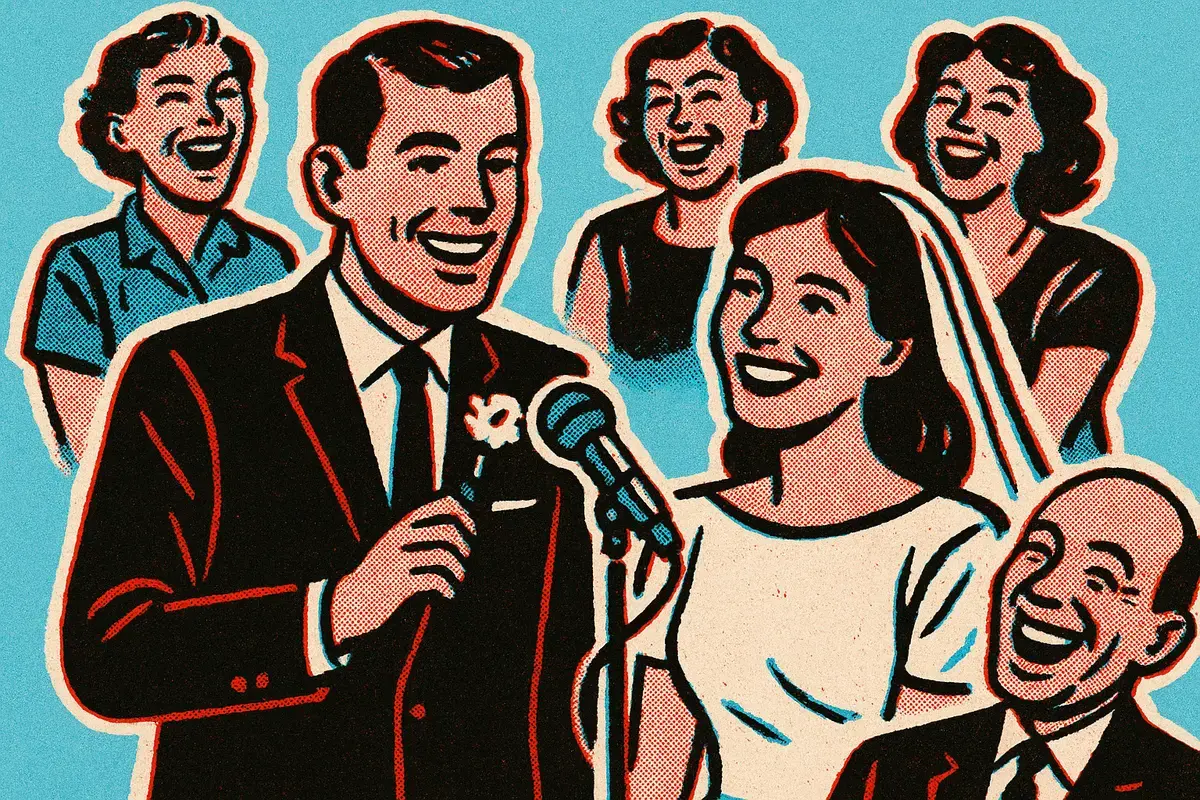
Search "groom speech examples" and you'll find two kinds of results. Template scripts heavy on stiff thank-you lists that read like an awards-show acceptance speech. And TikTok clips of grooms whose speeches made the room laugh, then made their new spouse — and half the guests — cry.
The template ones are safe and forgettable. The TikTok ones are the reason a partner replays the video on every anniversary.
This article is about the second kind. We've pulled three real groom speeches from TikTok and broken down exactly what each one is doing — the move it pulls, the beat that lands it, and what you can steal for your own.
The groom's speech has a unique challenge: it's part thank-you, part love letter, and the two pull in different directions. The speeches that work know how to do both without sounding like a list or a greeting card.
Three things every great groom speech gets right
Before the examples, the short version of what separates the speech that floors the room from one they politely clap through.
- Thanks that feel personal, not procedural. Everyone has to be thanked. The trick is making each one land instead of reading a roll-call.
- One real line to your partner. Not "you're my everything." One specific, honest thing only you'd say.
- A tone that carries the room. The groom usually opens the toasts. Warmth, a little humor, and genuine gratitude set the mood for the whole night.
All three clips below are doing one of these better than almost anyone. Here's how.
Example 1: The thank-you that actually lands
What's happening. The caption says it all: "Justin's speech for his mom left every guest in tears." This isn't a name on a thank-you list — it's one thank-you, to one person, made so specific and heartfelt that the whole room felt it.
Why it works. The groom has the longest thank-you list at the wedding — both sets of parents, the wedding party, the travelers, the guests. Done badly, it's a roll-call: name, name, name, "thanks for coming." The room glazes over. Done like this, the groom picks the thank-yous that matter most and gives them a real reason and a real moment. A thank-you to his mom that makes people cry isn't longer than a generic one — it's just specific. It names what she actually did, and it's said like he means it.
That's the whole trick: you don't thank everyone equally. You give your two or three most important people a genuine moment each, then group the rest quickly and warmly.
What to steal. Take your three most important thank-yous and, for each, write the one reason underneath the name — the specific thing they did. "Thanks to my mum" becomes the story of what she got you through. Keep the rest of the list short and grouped. The room forgives a quick "and thank you all for coming" when the big ones clearly meant something.
Example 2: The line to your partner
What's happening. This is the groom turning to his new wife for the part the whole speech is really for — the romantic, personal words. The clip is tagged for exactly what it is: a groom's heartfelt, romantic moment with his partner.
Why it works. This is the moment most grooms fumble, usually by reaching for the biggest possible words: "you're my soulmate, my best friend, my everything." It's sincere and it's weightless, because it could be said by anyone about anyone. The grooms who land it go smaller and truer — one real thing, said while looking at their partner, not the room. Specificity is what makes the room believe it.
There's also a delivery tell. The grooms who land this part slow down and say it to their partner — the speech stops being a performance for the guests and becomes a private sentence the room happens to overhear. That shift is what makes everyone reach for a napkin.
What to steal. Cut every grand word from your line to your partner. Replace it with one concrete thing — a moment you knew, a small thing they do, the reason today matters. Then turn and say it to them, not to the microphone. That's the line they'll remember forever.
Example 3: Set the tone — gracious, warm, a little funny
What's happening. The videographer flagged this one as the model — "grooms take note on this one" — and it's worth studying for the thing that's hardest to teach: tone. The groom's speech traditionally opens the toasts, which means the whole room takes its emotional cue from how he carries it.
Why it works. A groom's speech leans gracious and heartfelt — but a few minutes of pure gratitude can flatten a room. The grooms who set the tone well put one light, self-aware laugh near the start. It does two things: it relaxes them (the groom is more nervous than the best man, even if he won't admit it), and it buys the room's attention for the sincere parts later. The humor is warm and aimed at himself — never at his partner, and never the best man's job to roast.
The reason tone matters more than any single line is that the groom's speech is the room's first real emotional beat of the night. Get it gracious and warm, and every speech after it lands better.
What to steal. Plant one light, self-deprecating laugh in the first thirty seconds — something true and warm, aimed at yourself. Then let the speech turn gracious and sincere. The early laugh settles your nerves and tells the room they're in good hands for the rest of the night.
The reusable framework
Across the three, the craft of a groom speech reduces to three pillars:
- Make each big thank-you specific. Name the reason, not just the person. Give your two or three most important people a real moment, and group the rest.
- Say one true thing to your partner. Cut the grand words. One concrete, honest line — delivered to them — beats a paragraph of "everything".
- Set the tone with warmth and a laugh. Open with one self-aware joke, then go gracious. You're the room's first emotional beat — carry it well.
Everything else — the venue housekeeping, the running order, the "I'll hand over to" — is logistics. Keep it short.
What not to do (two common fails)
Fail 1: The acceptance speech. A breathless list of names with no detail, like you're running out of time at the Oscars. Fix: pick the three thank-yous that matter, give each a reason, and group the rest.
Fail 2: The greeting-card vow. Stacking the biggest words you can find for your partner. Fix: one specific, real thing said simply will out-land "you complete me" every single time.
A note on writing vs. talking your speech
One thing worth flagging. Watch those clips with the captions off and the grooms who land it sound like they're talking to their partner and their guests — warm, a little nervous, real — not reading an address.
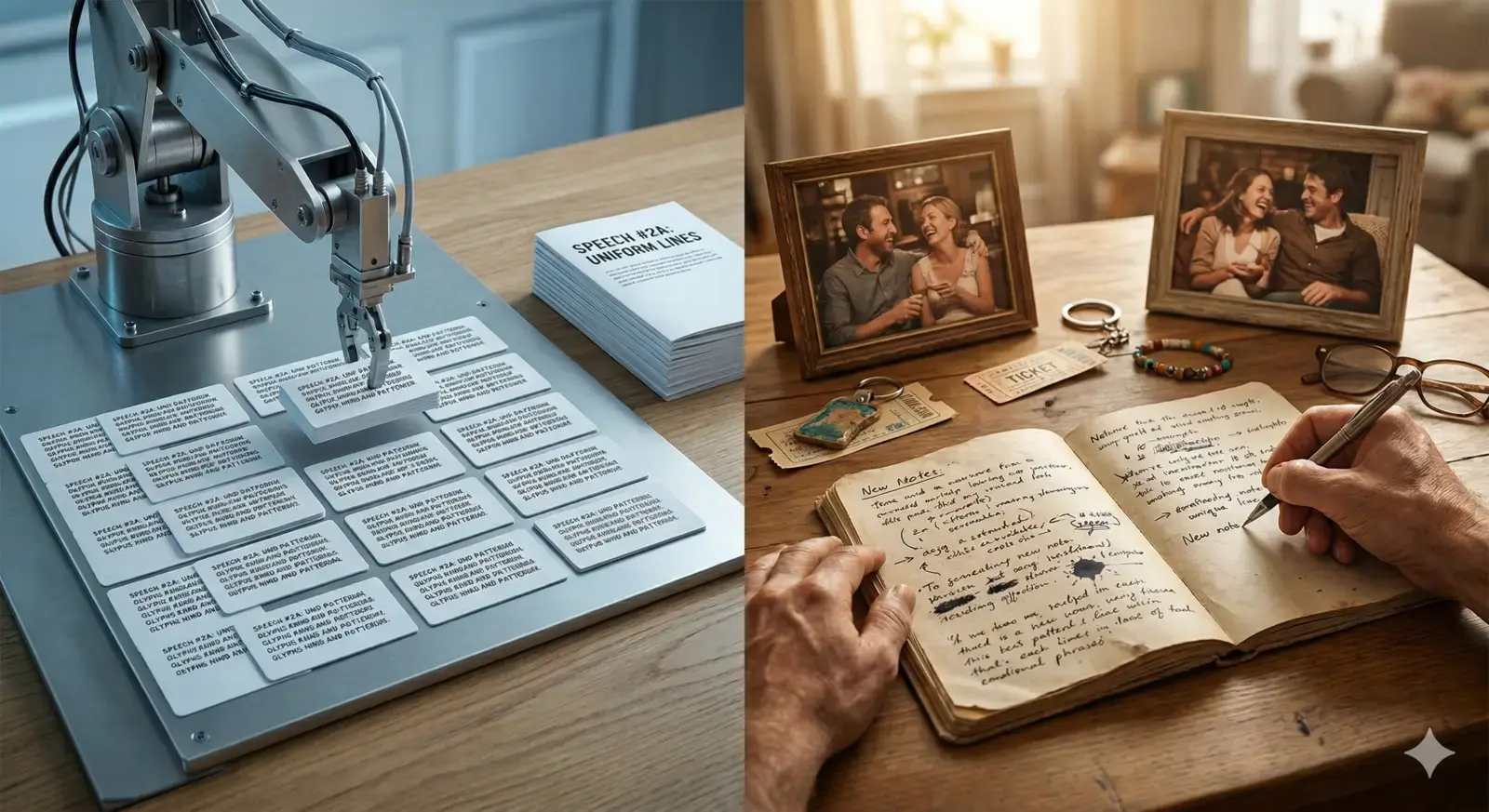
That's almost impossible to fake by typing at a blank page. Typing makes the thank-yous sound like a list and the love lines sound like a card — exactly the two traps groom speeches fall into, and part of why most AI wedding speeches feel generic.
If you want your speech to sound like you, start by speaking it. Record a voice note: who you most want to thank and why, the one true thing you'd say to your partner, the light line you'd open on. Don't script it. Just talk. Then shape that into a speech — or let a tool built for exactly this job do the shaping for you.
Try this before you write a single line
Twenty minutes, no writing required. Open your phone's voice recorder and answer these three prompts out loud, one at a time:
- The big thank-yous. Name your three most important people and, for each, the one real reason you're grateful to them.
- The line to your partner. Say the single most specific, honest thing you'd tell them — not the grandest.
- The opener. Say the warm, self-aware line you'd use to settle the room in the first thirty seconds.
Stop recording. That's the spine of your speech. Everything else is logistics.
When you're ready to turn it into something you can stand up and deliver, start with your voice, not a blank page.
Ready to try talk-first speech writing?
Skip the blank page. Speak your memories and Nail The Speech will turn them into a speech that sounds like you.
Start Your SpeechNot ready to write yet? Grab the free 10-questions PDF to find your stories first.
Related Articles

Great speeches start with speaking
The only wedding speech generator that starts with your voice. Talk through your memories and get a speech you're proud to deliver.
Start Your Speech